
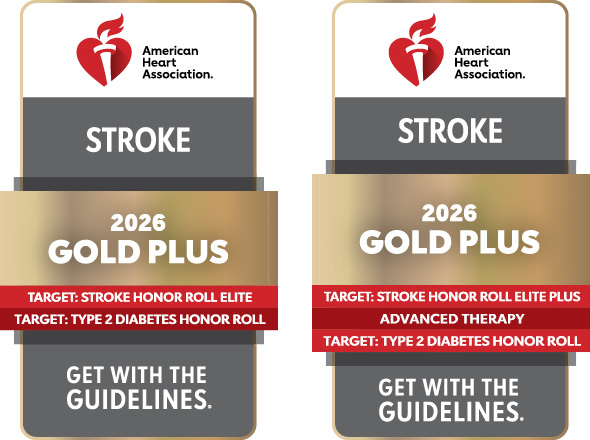
Capital Health Regional Medical Center in Trenton, New Jersey and Capital Health Medical Center – Hopewell recently received the American Heart Association’s Gold Plus Get with The Guidelines®- Stroke Quality Achievement Award. This award recognizes Capital Health’s commitment and success in ensuring stroke patients receive the most appropriate treatment according to nationally recognized, research-based guidelines based on the latest scientific evidence.
As one of 12 state-designated comprehensive stroke centers in New Jersey and home to Capital Institute for Neurosciences (for patients who require the most advanced treatments for neurovascular and stroke care), Capital Health Regional Medical Center received the American Heart Association’s Target: StrokeSM Honor Roll Elite Plus award and the Target: StrokeSM Honor Roll Advanced Therapy award. To qualify for these recognitions, Capital Health Regional Medical Center must meet quality measures developed to reduce the time between a patient’s arrival at the hospital and treatment with clot-busting medication. Capital Health Medical Center – Hopewell received the American Heart Association’s Target: StrokeSM Honor Roll Elite award.
Additionally, Capital Health Regional Medical Center and Capital Health Medical Center – Hopewell each received the Association’s Target: Type 2 Diabetes Honor Roll award. Hospitals that qualify for this recognition ensure patients with Type 2 diabetes, who might be at higher risk for complications, receive the most up-to-date, evidence-based care when hospitalized due to stroke.
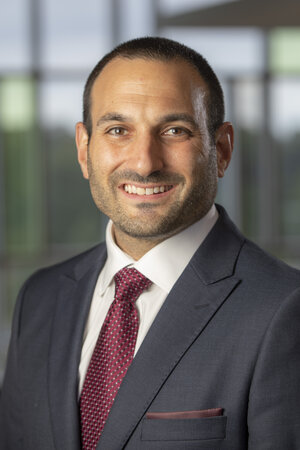
“These awards from the American Heart Association and the American Stroke Association show our community that we never stop working to improve the high quality of care we offer our stroke patients at our hospitals,” said Dr. Dustin Rochestie, chief of Neurology and Critical Care at Capital Institute for Neurosciences. “As part of the Get With The Guidelines stroke initiative, we see measurable improvements to stroke care with better outcomes and fewer recurring events for patients and their loved ones.”
Hospitals like Capital Health Regional Medical Center and Capital Health Medical Center – Hopewell earn these awards by demonstrating a commitment to providing quality care and meeting specific quality achievement measures for the diagnosis and treatment of stroke patients at a set level for a designated period. These measures include evaluation of the proper use of medications and other stroke treatments aligned with the most up-to-date, evidence-based guidelines with the goal of speeding recovery and reducing death and disability for stroke patients. Before discharge, staff provide patients with education on managing their health, as well as information to make their follow-up appointment, including the name and contact information for the physician and when to make their appointment.
“We are proud to recognize Capital Health for its commitment to caring for people experiencing stroke,” said Dr. Steven Messe, volunteer chair of the American Heart Association Stroke System of Care Advisory Group. “Participation in Get With The Guidelines is associated with improved patient outcomes, including greater likelihood of being discharged home, fewer readmissions and lower mortality rates — a meaningful benefit for health care systems, families and communities.”
Stroke is the fourth leading cause of death and a leading cause of adult disability in the U.S., according to the American Heart Association. A stroke occurs when a blood vessel that carries oxygen and nutrients to the brain is either blocked by a clot or bursts. When that happens, part of the brain cannot get the blood and oxygen it needs, so brain cells die. Early stroke detection and treatment are key to improving survival, minimizing disability and supporting faster recovery. Get With the Guidelines-Stroke was developed to assist health care professionals to provide the most up-to-date, research-based guidelines for treating stroke patients.
Each year, program participants apply for the award recognition by demonstrating how their organization has committed to providing quality care for stroke patients. In addition to following treatment guidelines, clinicians from Capital Institute for Neurosciences also provide education to patients to help people manage their recovery and ongoing health at home.
Stroke is a time-sensitive emergency. If you suspect you or a loved one is experiencing a stroke, B-E F-A-S-T to know the signs of a stroke and call 911 immediately.
- B (Balance): Is the person experiencing a sudden loss of balance?
- E (Eyes): Has the person lost vision in one or both eyes?
- F (Face Drooping): Does one side of the face droop, or is it numb?
- A (Arm Weakness): Is one arm weak or numb? Ask the person to raise both arms. Does one arm drift downward?
- S (Speech Difficulty): Is speech slurred? Is the person unable to speak or hard to understand? Ask the person to repeat a simple sentence, like “The sky is blue.” Is the sentence repeated correctly?
- T (Time to Call 911): If someone shows any of these symptoms, even if the symptoms go away, call 911 and get the person to the hospital immediately. Check the time so you’ll know when the first symptom appeared.
To learn more about Capital Health’s commitment to providing advanced care for stroke patients and those with other complex disorders of the brain and spine, visit capitalneuro.org.